

We have devoted numerous hours playing Crazy Time, and one question constantly prevails: how frequently do those elusive scatter symbols truly appear? The scatter trigger opens the game’s most exciting bonuses and greatest payout potential. Comprehending its frequency is not merely curiosity; it shapes bankroll management, creates realistic expectations, and assists you detect a cold streak prior to it drains your balance. We analyze the reel layout, symbol distribution and probability underlying the scatter trigger allowing you to approach every session with a well-defined, practical strategy that makes the wait during bonuses much more bearable.
Player Strategies for Scatter‑Triggered Bonuses
The second those three scatters illuminate the screen, our main focus turns to maximizing the bonus outcome without veering from a predetermined plan. The feature typically features a wheel spin that decides the multiplier and a subsequent picking round with secret payouts. We steer clear of random choices; alternatively, we adhere to a steady routine, consistently selecting the same position, not due to it alters the odds, but since it removes the remorse of switching and hesitating. This discipline is highly beneficial when scatter triggers are infrequent, because the emotional stress to “make this one count” can cause impulsive moves that seem worse after a poor outcome.
Capitalizing on Multiplier Accumulation Mechanics
Many bonus round variants include a growing multiplier trail that increases worth with each free spin. We approach these spins patiently, never rushing through animations because multiplier increments can jump from 2x to 100x in a single jump. If the feature includes a gamble option to risk scatter winnings for a chance at an larger prize, we nearly always refuse unless the amount is insignificant. The reason links directly to scatter frequency: with triggers so infrequent, converting a guaranteed 50x bonus into zero by chasing a uncommon gamble victory hurts far more than in a low‑variance game where features occur every few dozen spins.
Game Breakdown and the Carnival Concept
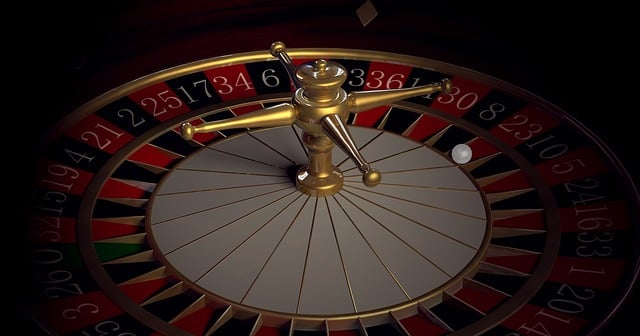
Crazy Time brings players into a vibrant carnival world of neon lights, oversized prize wheels and an animated host that appears straight out of a live game show. The slot version delivers this festive atmosphere into a classic five‑reel format. Symbols feature detailed multipliers, colourful show props and the all‑important scatter icon, the gateway to bonus rounds. Upbeat music, crowd cheers and dramatic win animations boost every spin. The theme signals that unpredictable, high‑energy moments are always just one scatter away, keeping us fully engaged even during quiet base‑game stretches.
Primary Symbol Ranking and Payouts
The paytable is structured around bonus segments drawn by the original live game show. Low‑paying symbols are stylised card royals, while high‑value icons feature Cash Hunt targets, Pachinko balls and Coin Flip tokens. The top regular symbol offers up to 50 times your line bet for five of a kind, keeping the base game interesting between activations. Crucially, the scatter symbol offers no direct cash reward; its sole purpose is to build into trigger combinations that launch the feature round. Because every scatter feeds to a bonus countdown rather than an instant win, that distinction influences how we judge a session’s momentum.
The scatter icon and bonus trigger mechanics
The scatter symbol is obvious: a shining golden wheel icon encircled by throbbing neon rings, mirroring the game’s titular bonus round. It shows up across the reels and doesn’t require to align on a payline; any three or more scatters in any position immediately activate the bonus feature. The visual anticipation when two scatters land and a third reel is still spinning is intentionally intense, building anticipation. Because the scatter holds no direct cash value, its true worth lies completely in how often it can assemble the trigger combination and if the resulting free spins produce big multipliers.
Scatter payout combinations and retriggers
Hitting three scatters gives an opening set of free spins, while four and five scatters provide both a larger starting spin count and an direct scatter pay multiplier. For example, three scatters might give 10 free spins with no upfront cash, but four scatters can deliver 15 free spins plus a 10x bet bonus. Five scatters are truly rare (their frequency stands below one in several thousand spins) and activate the maximum spin package paired with a 50x or 100x immediate reward. Understanding this tiered structure gives us a clearer view: we care about the three‑scatter rate as the baseline, but the four‑ and five‑scatter events are the real jackpot triggers.
Trigger sequence and player engagement

Once the bonus round activates, players commonly choose from a grid of hidden multipliers or spin a secondary wheel that determines the number of free spins and the starting multiplier. There is no skill element; the outcome is fixed the moment the scatters land, but the interactive layer adds a sense of agency. This clever design conceals the true mathematical frequency of high‑value results. Even if we understand a scatter trigger happens roughly every 140 spins, the variability inside the bonus round renders each activation feel unique and unpredictable, which is just what draws us coming back.
RTP and Variance: How Scatter Symbols Determine Winnings
The payout rate of Crazy Time typically sits in the 96.0% to 96.5% range, a figure that includes both standard game payouts and feature round worth. A substantial chunk of that RTP, often 30% or more, is centered inside the scatter‑activated bonus. This implies that during a long dry spell without three scatters, our effective short‑term return can decline well below 50%. The game demonstrates high volatility precisely because the big payouts are hidden behind a feature that triggers irregularly. We handle this with full awareness, knowing that a session without a bonus round is almost certain to finish in a deficit.
Handling Bankroll During Scatter Dry Spells
Because scatter dry spells of 200 spins or more are regularly seen over any two‑day session, we advise a bankroll that can cover at least 250 to 300 standard round wagers. If you are betting at ₹10 per round, allocate ₹2,500 to ₹3,000 as a lowest session stake. An underfunded session risks a prolonged dry period wiping you out before the scatter trigger delivers its expected value. We’ve witnessed players get frustrated during these periods and raise bets irrationally; a far superior strategy is to maintain the wager flat and rely on the long‑term maths, only modifying when the scatter frequency suggests a mean reversion is expected.
Evaluating Crazy Time Scatter Frequency with Industry Averages
When we put Crazy Time’s scatter trigger rate of about 1 in 140 spins versus the broader slot market, it lands squarely in the medium‑to‑high rarity category. Well-known titles like Starburst depend on low‑volatility base game hits and do not even use a scatter bonus. High‑volatility giants including Dead or Alive 2 can push scatter trigger intervals to 1 in 200 spins or beyond. In that context, Crazy Time isn’t extremely stingy, but it necessitates a similar level of patience. Indian players used to fast‑paced, low‑volatility Bollywood‑themed slots could feel the gap between scatters is awkwardly wide until they tweak bet sizing and session expectations accordingly.
How the Scarcity Implies for Session Planning
Since scatters are the only route to the top multiplier prizes, every spin that doesn’t contribute to a trigger seems like a direct drain on the balance. Treat a Crazy Time session as three distinct phases: the base game grind, the frequent small‑to‑medium line hits that keep the balance ticking over, and the periodic burst of the bonus feature. If you mentally budget for 800 spins in a two‑hour session, you can fairly expect five or six scatter triggers. That framework alone avoids the frustration that comes from expecting a bonus every five minutes and instead meeting the reality of a fair but stretched‑out distribution.
Wager Ranges and Their Effect on Scatter Frequency
In the Indian market, Crazy Time slots typically provide a wide bet range from as little as ₹5 up to ₹10,000 per spin. This flexibility is excellent, but bet size has no influence on when scatters land. The random number generator doesn’t mind if you’re betting ₹10 or ₹1,000, the scatter trigger probability stays absolutely the same. What changes is the cash value of the bonus. A high roller landing three scatters on a ₹5,000 spin collects the same number of free spins as a minimum bettor, but the multiplier awards translate into much larger rupee amounts. Scatter frequency needs to be discussed separately from payout size.
Choosing a Bet Size Based on Scatter Tolerance
Given a known average trigger interval of 130 to 160 spins, you can compute the expected cost to reach a bonus round at various stakes. At ₹20 per spin, expect to invest roughly ₹2,600 to ₹3,200 before seeing a feature. At ₹200 per spin, that figure rises to ₹26,000 to ₹32,000. Use these estimates as a benchmark for determining how much risk you’re comfortable with. Casual players often cap their per‑spin bet so that a full bonus cycle costs less than 5% of their session budget. Serious grinders, on the other hand, build spreadsheets and track actual scatter intervals to spot any advantageous short‑term deviations.
The Reel Layout and Payline System
Crazy Time features a conventional five‑reel, three‑row grid that seems instantly familiar. The number of paylines is set at 20, spanning from left to right and needing matching symbols on adjacent reels commencing from the leftmost. Scatter symbols function independently of these paylines: they may land anywhere and still qualify toward a bonus trigger. This considerably changes the mathematics compared with regular line hits. This anywhere‑pays mechanic makes scatter frequency a more lenient number than, for instance, the odds of hitting a five‑of‑a‑kind wild line, and it accounts for why bonus rounds may come even when paylines are quiet.
Reel Strip Composition and Its Role
The precise reel strips are not revealed, but we can reverse‑engineer likely layouts from observed play. Each reel blends regular symbols and a small number of scatter positions. In a common medium‑to‑high volatility configuration, reels 1, 2 and 3 may contain two scatter stops each, while reels 4 and 5 hold only one. This asymmetric distribution strictly regulates the chance of landing three or more scatters. With total symbol stops per reel usually between 50 and 70, individual scatter hit rates fall between 1.4% and 4% per spin, creating a rare but structured trigger path.
Mathematical Analysis of Scatter Trigger Frequency
The main question, how frequently scatters land, hinges entirely on the count of scatter stops positioned on each reel and the combined stops per reel. Using a 50‑stop reel set with scatters on three of the five reels (two on reel 2, two on reel 3, one on reel 4), the chance of exactly three scatters multiplies the hit rates of the scatter‑bearing reels while adjusting for misses elsewhere. In this representative model, the chance per spin amounts to approximately 0.64%, translating into an anticipated trigger every 156 spins. Real‑world variance extends this into a large spectrum, spanning from 80 to 300 spins between bonuses.
Step‑by‑Step Probability Calculation
Let’s examine a specific example. Consider reels 2, 3 and 4 each feature one scatter, with frequency rates of 1 in 25, 1 in 25 and 1 in 50. The chance that all three land on the same spin is (1/25) × (1/25) × (1/50) = 1 in 31,250. That figure is far too low because scatters can occur in any combination of three reels out of five. If all five reels contain one scatter each at a 1 in 40 hit rate, the chances of any three landing, derived via binomial probabilities, approach closer to 1 in 145 spins. Remember, these are theoretical long‑term averages and specific sessions will deviate considerably, making strict bankroll rules essential.
The Influence of Scatter‑Only Reels
Some slot designs limit scatters to reels 2, 3 and 4 only, which simplifies the probability calculation but also reduces the trigger frequency compared with games where all five reels can hit. If the Crazy Time version you play adopts this pattern, the odds tighten because there are fewer methods to assemble a three‑scatter combination. A typical configuration with two, two and three scatter stops on reels 2, 3 and 4 out of 60 total stops each gives a probability around 0.75%, or a 1‑in‑133 average. This slight difference has a observable effect on how a multi‑hour session feels, making it crucial to know which variant you’re playing.
FAQ
What exactly is the scatter trigger frequency in Crazy Time?
The scatter trigger frequency represents how often you can count on three or more scatter symbols to land and trigger the bonus. According to typical reel strip configurations, this happens roughly once every 130 to 160 spins on average. The exact number differs by the specific slot version and its reel composition, but no official figure is disclosed by the provider. In practice, intervals span from as few as 50 spins to well over 300 spins during normal variance.
Does increasing my bet size make scatters show up more often?
No, the bet size has no effect on how frequently scatter symbols land. The random number generator determines the reel positions independently of your stake. When you bet ₹10 or ₹1,000 per spin, the probability of hitting three scatters remains identical. A larger bet just increases the cash value of any bonus round that does trigger, because multiplier awards inside the feature are applied to your total bet. Bankroll management should inform your stake choice, not the hope of forcing more triggers.
Is it possible to track scatter frequency to anticipate the next bonus round?
Because each spin in Crazy Time is an independent event, no amount of tracking past outcomes can determine when the next scatter trigger will occur. The slot uses a certified random number generator that makes every result independent of the previous one. While we often keep logs of dry spells and hit rates for our own analysis, these records only show variance; they can’t forecast future spins. The safest approach is to view the published theoretical frequency as a long‑term average, not a schedule.
What is the maximum number of free spins I can get from scatter triggers?
Most Crazy Time slot versions award up to 25 free spins from a single scatter combination when you land five scatter symbols, though exact figures rely on the specific game build. Three scatters typically offer 10 to 12 free spins, while four scatters provide 15 to 18 spins plus a small instant bonus. The feature can sometimes be reactivated by landing additional scatters during the free spins round, effectively pushing the total spin count higher. Always check the game’s paytable for the precise numbers your version uses.